
Natural Stake, Devilish Tree
Common buckthorn is not inherently problematic, it is simply a plant growing in an ecosystem unprepared to handle it. As we manage its spread, there is still room for thoughtful use of what it offers…

Natural stakes
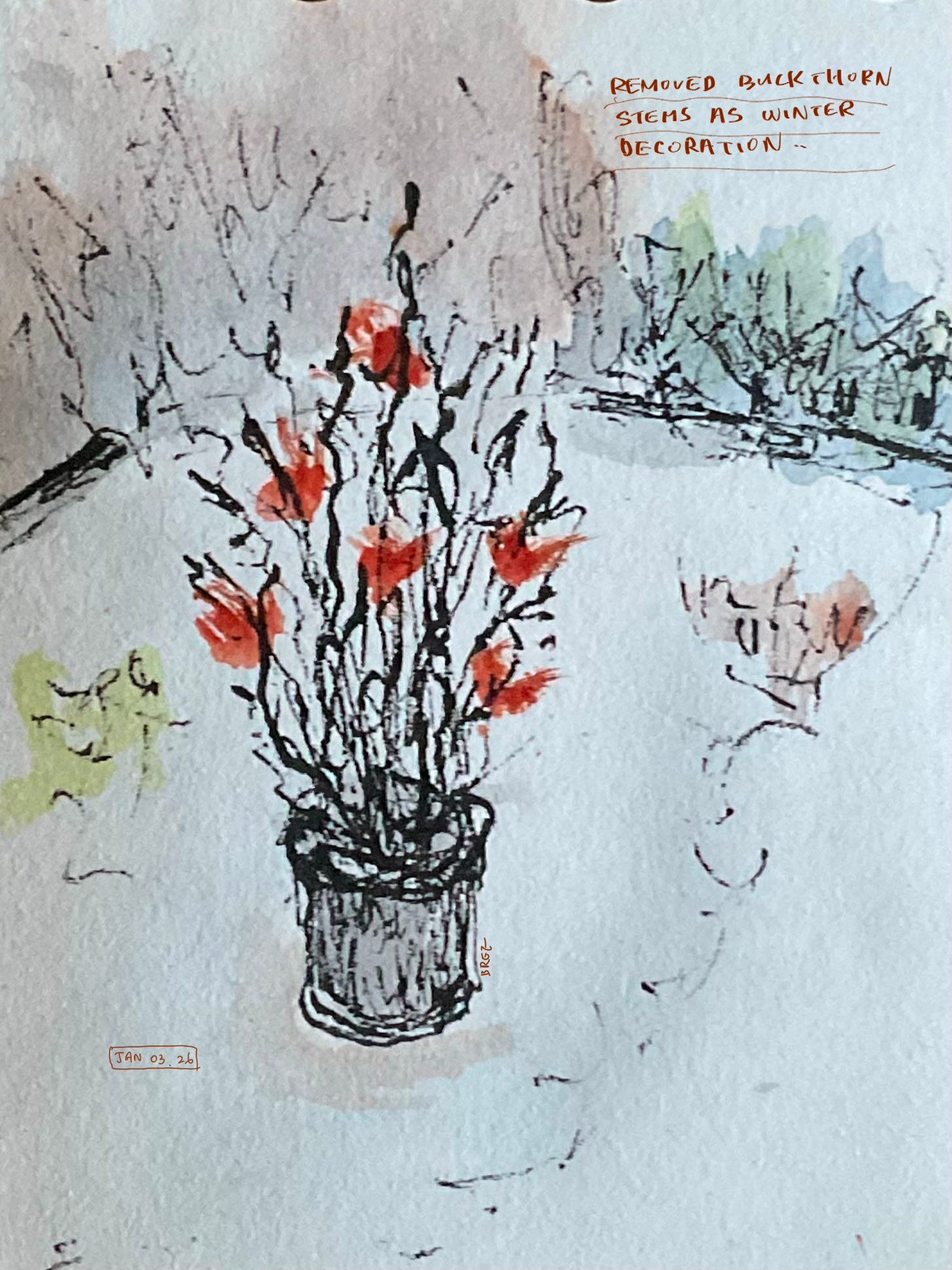
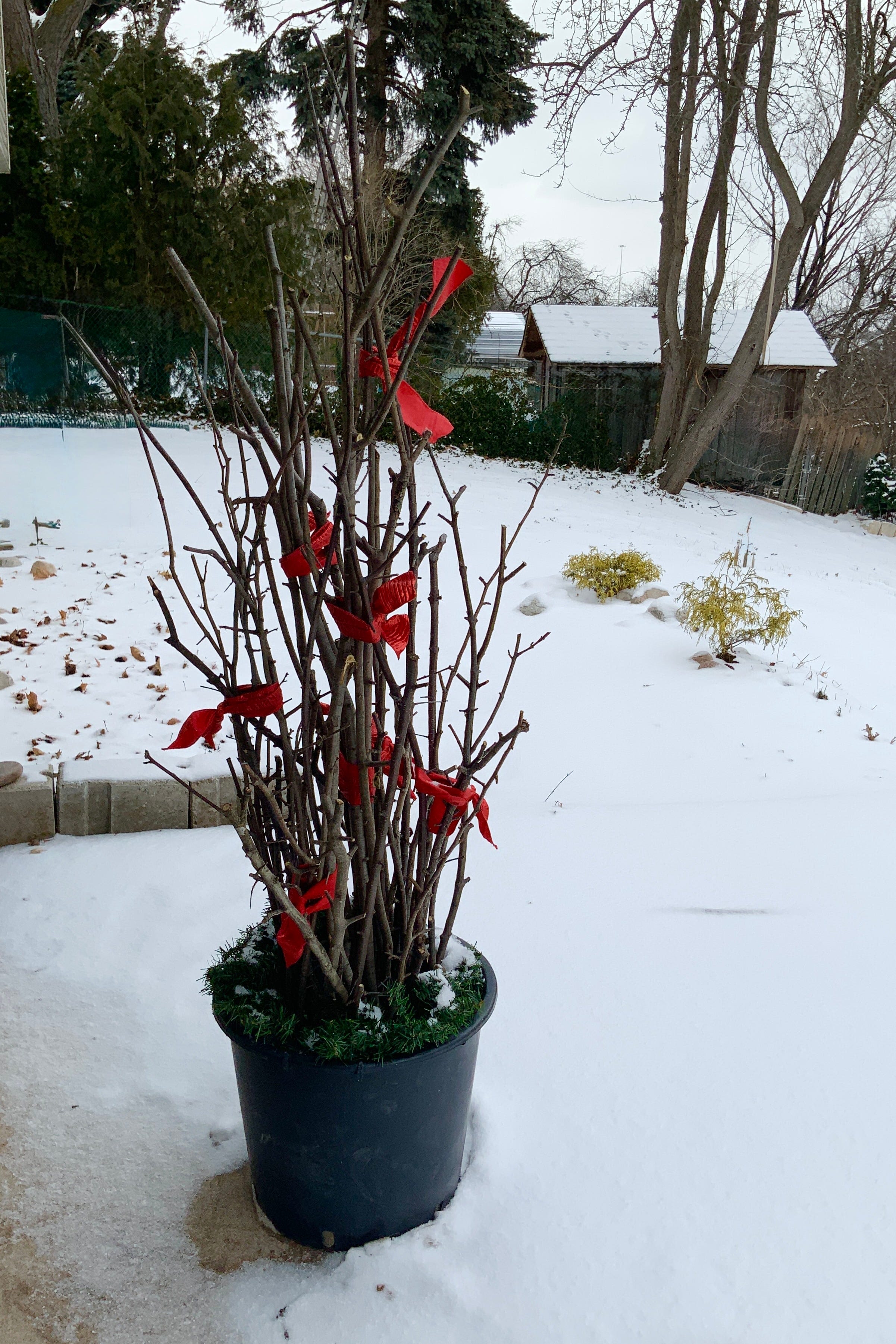
This year, I made holiday decorations using stems from removed common buckthorn, and they turned out beautifully.
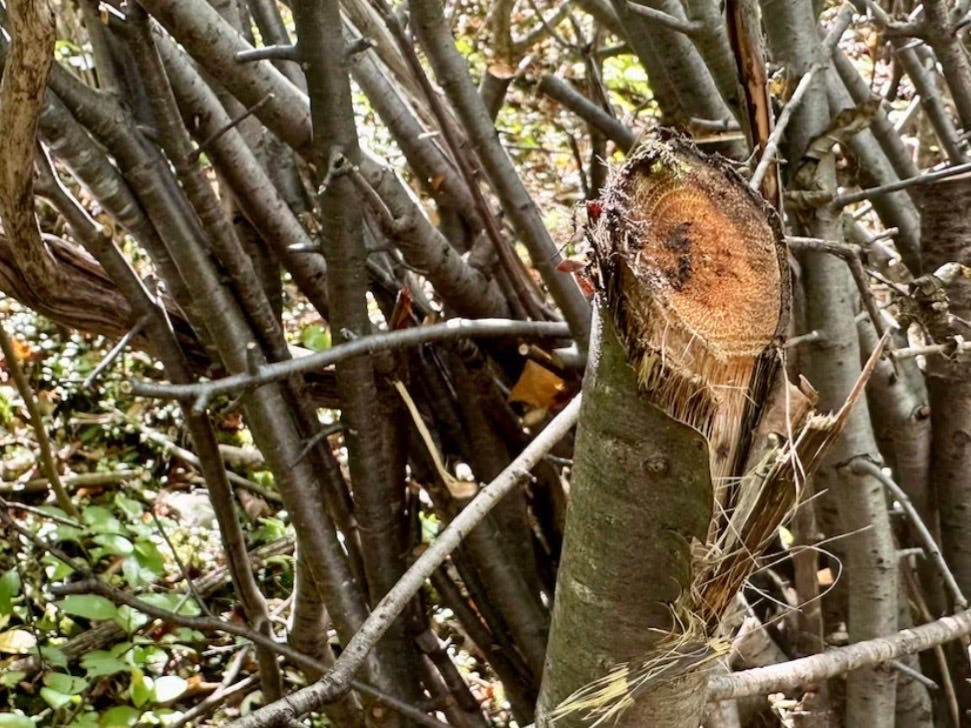
Two years ago, I cut several small buckthorn trees at the edge of our backyard. The freshly cut wood revealed a striking yellow-orange heartwood. Rather than letting the stems go to waste, I kept them. Once dried, they became sturdy stakes for cosmos in the garden. After two full seasons of outdoor use, these stems are still holding strong.
Beautiful Heart
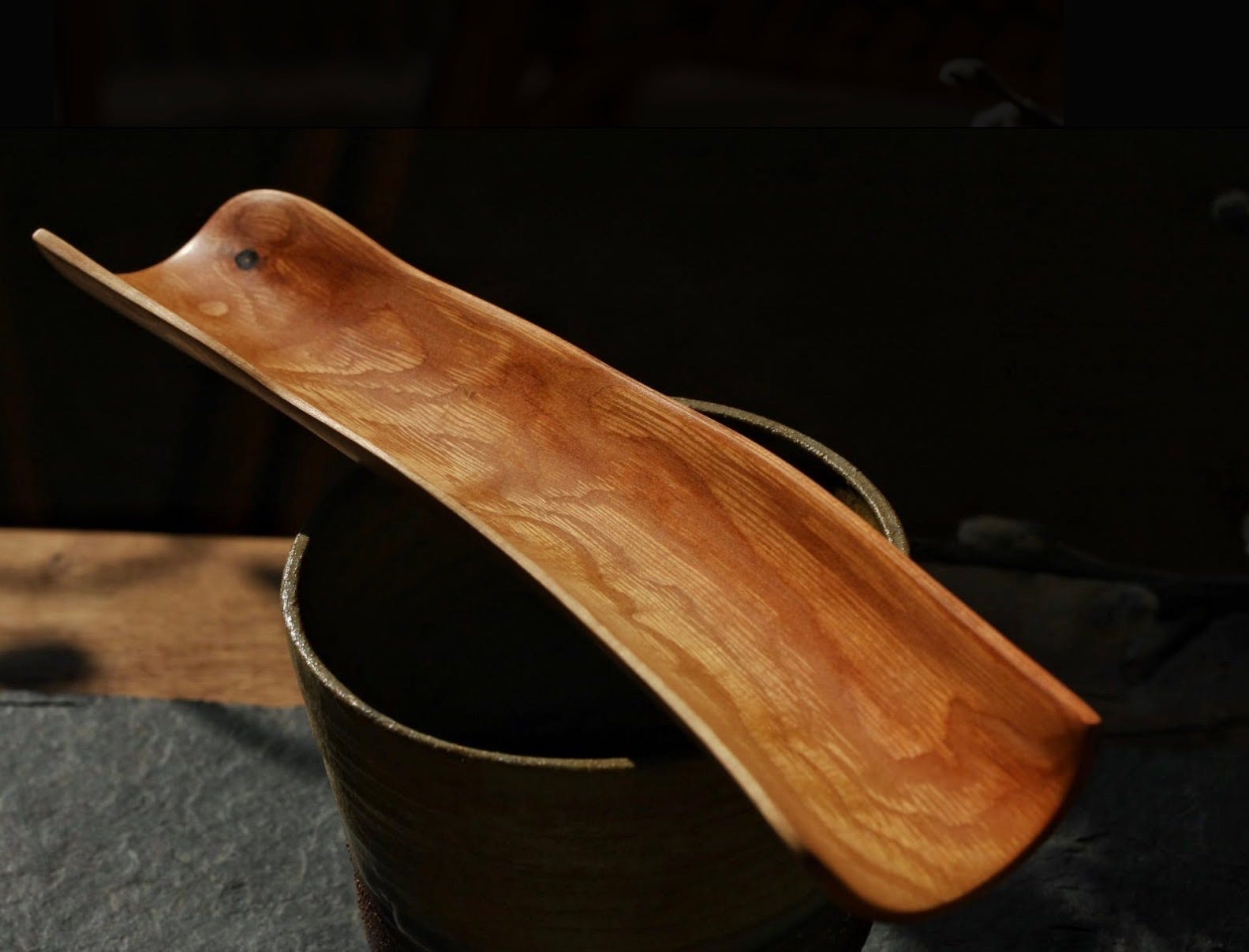
Buckthorn wood is dense and strong, with striking burnt-orange heartwood and fine grain, making it excellent for crafting.
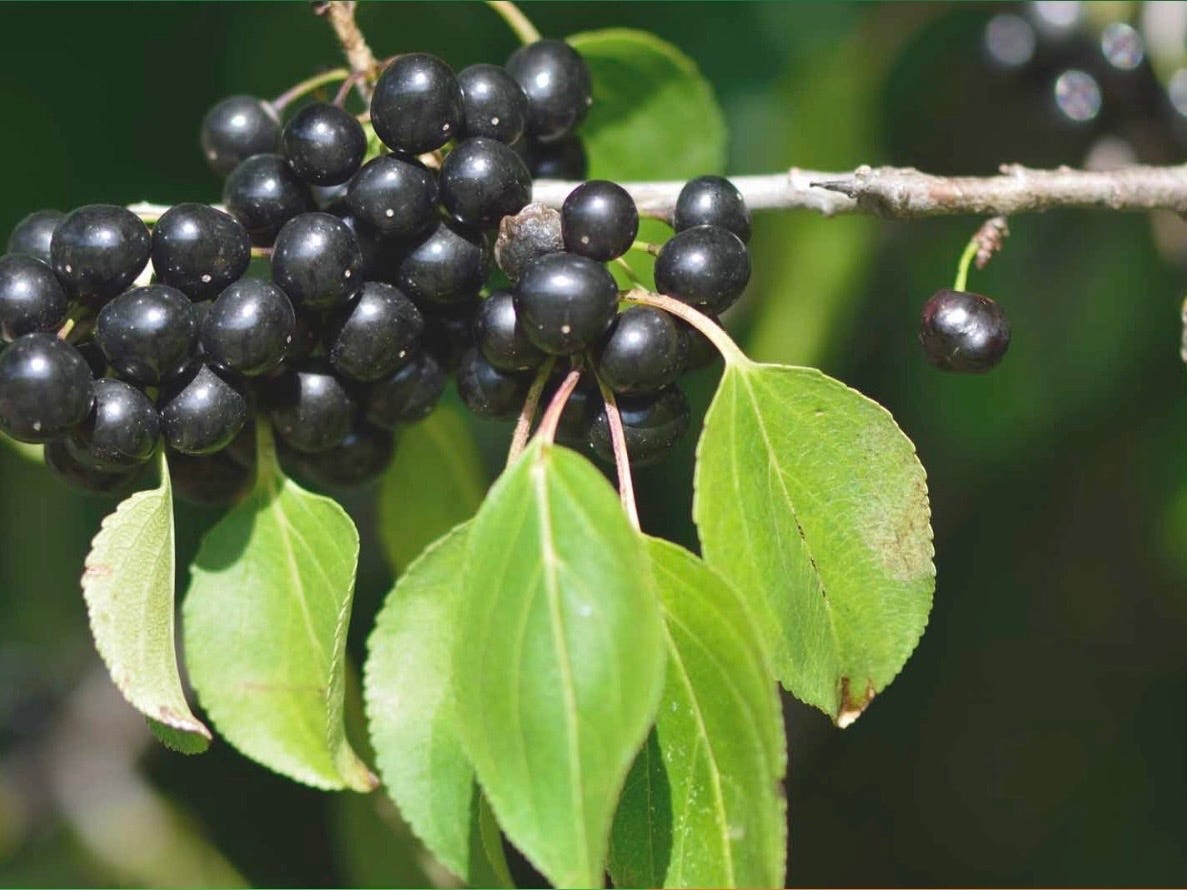
But to prevent the spread of berry seeds, cut material is typically burned or chipped on site. Such a waste! A stem under 3 cm in diameter usually takes 3–4 years to grow.
There should be better ways to control seed spread without such blunt disposal methods. In reality, the risk is very low if buckthorn is cut outside the berry season. Berries ripen from late summer to fall and often remain on the plant into winter.
Devilish Tree
Buckthorn is often labeled a villain, that label oversimplifies a much more complex story, rooted in ecosystems, history, and human influence.
Why the bad reputation?
Buckthorn crowds out native plants through aggressive growth, reducing habitat quality.
It lowers wildlife diversity. While birds eat the berries, most insects and mammals in North America have not evolved to use it as food, unlike in Europe.
Why is the plant a threat only in North America?
The primary reason is the absence of natural predators such as specialized insects and fungi. In Europe, buckthorn evolved alongside these controls and exists as part of a balanced ecosystem.
Human disturbance accelerated its spread. In North America, buckthorn was Introduced intentionally. Once introduced, buckthorn thrived along roadsides, farms, and forest edges.
Why was it introduced?
European settlers brought common buckthorn to North America in the 1800s as an ornamental hedge and windbreak, valuing its toughness and adaptability -without knowing the long-term consequences.
Known as common buckthorn, European buckthorn, or purging buckthorn, it has a long history in Europe. It was used in traditional medicine since the Middle Ages and valued for dyes - yellow from the bark and green from unripe berries.
Reference(s)
